Thursday, June 20, 2019

Impact Wrench Battery Rebuild


I bought an old Snap On impact wrench at a garage sale recently. It's a good brand that's usually too expensive for me to buy. It came with two batteries, but I thought even if I had to buy a new battery it might still be a good deal.
After testing it out for a couple of weeks, I found that one of the batteries wasn't holding a charge and the charger said it was bad. I attempted to charge it with a different charger, but it still wouldn't charge all the way. After looking at prices for the name brand battery pack, I decided to look at battery rebuild kits instead. The pre-assembled ones were still too expensive, so I decided to buy 12 individual sub C nickel cadmium cells and solder them together myself.
Opening the plastic case was straightforward, just requiring a T10 torx bit. I watched several Youtube videos on battery pack rebuilding so I knew what supplies I would need.

First, I arranged the cells in the same pattern as the original battery pack, and hot glued them together.
Then I used nickel plated steel strip to connect them. I was worried that soldering might make the cells too hot. The proper way to attach them would be with spot welds. Soldering did work, but the heat might shorten the lifespan of the cells. It was difficult to get the solder to stick in some spots, so I had to sand the ends of the cells

After I attached and connected the cells, I tested the fit in the original case and added a new piece of foam to the bottom. The cells seemed to fit well, but when I tried to slide the battery in and out of the tool, I found that the button on one side wouldn't release.  the negative connector was shifted slightly, so I had to take it apart again, and resolder one of the connections. After that, the buttons functioned perfectly. Now it holds a full charge.

Monday, June 17, 2019

Cordless Power Tool Storage


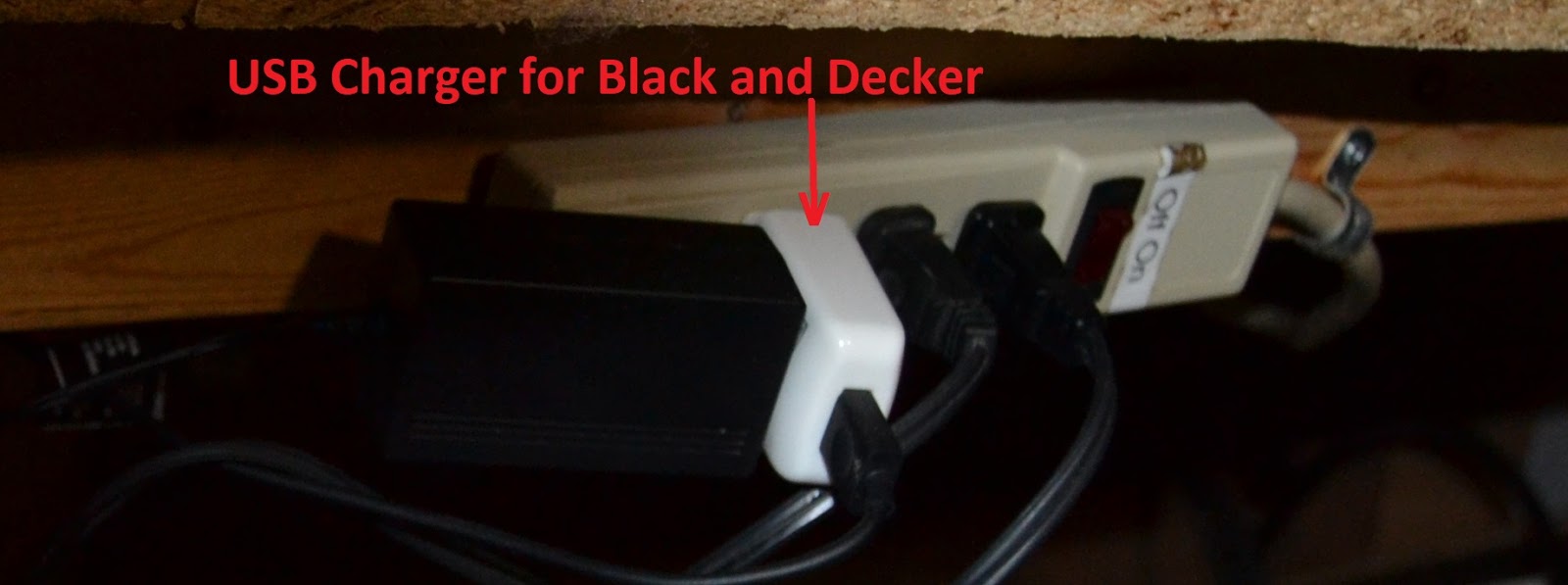
After watching a video on cordless power tool storage solutions, I decided to build my own. I wanted something quick and easy to modify later. Right now, I have 4 cordless power tool systems, each with a different charger and battery type. I have the Snap-On 14.4 V Ni-Cd slide battery, Craftsman 12V lithium, Worx 20V lithium, and Black and Decker 4V(internal lithium). I want to make sure the batteries are charged and ready for whatever projects my family is doing, and keep the spare batteries from getting lost.
To attach the Snap-On and Craftsman chargers, I used the keyhole mounts on the back. All I had to do was install 2 screws each, and then the chargers slide on because they are designed to be mounted. The Worx charger is not designed to be mounted, so I made a shelf for it. Then I added a piece of wood to mount the Snap-On impact wrench and its spare battery, and the Craftsman drill. I might need to add more wood to make a shelf with a back so things can't fall off.
I mounted a power strip above the chargers so I can plug them all in.
These are all around the end of the workbench on the left, easy to access from the door into the garage. The plan is to keep the area in front of the work bench and underneath mostly clear so that the truck could still fit in the garage if we get the rest of it cleaned out.

Power Strip

Wednesday, June 12, 2019

Beep Switch (Solar Power part 2)

One thing that the solar power system contains is a beeper. This is a continuation of the "dinner bell" project. Using one pair of wires from the phone lines in the house, my parents can press a button in the kitchen downstairs and it will sound the buzzer upstairs in my room. This is now successfully powered by my solar battery bank.

Wednesday, May 22, 2019

Solar Power System- Part 1- Battery Box

For my solar power system, I have an array of 3 12V 8 Amp Hour sealed lead acid batteries wired in parallel to get 24 Amp Hours. As a project for my shop class, I decided to build a nice box to store them in. I needed this because they are heavy and have to be moved with the rest of the charging circuit as a unit.  After I assembled the pieces of MDF and plywood, I painted them the closest color to white that was available. I added small hinges from a bucket sale at the local Habitat for Humanity Restore. The part of the project for class was just the woodworking, but I added a few switches at school. I also mounted an ammeter on the front, an automotive power outlet, and a desk grommet for the wires to pass through.


After I brought the box home, I added a ceramic handle on the lid. I installed the batteries, charge diode, 10 amp ATM  fuse, and a beeper for my dinner bell system. I added magnetic lid latches to keep the lid closed. The whole system is connected to a solar panel which charges the batteries. I mostly use it to power my speaker system.


Amazon Affiliate link to a 3 inch cord grommet: https://amzn.to/2JYSK6j
link for the fuse assortment I bought: https://amzn.to/2wdCWV1
link for 12V 8AH battery: https://amzn.to/2EpVrdk


Friday, March 22, 2019

Motorized Stirrer

I added a motorized stirrer to my overcomplicated tea maker. I used a motor from an electric knife and a small whisk. I attached the whisk to the shaft of the motor by twisting the wire like a threaded rod. It sometimes unscrews itself. I mounted it on a scrap of vinyl window nailing flange, so that it can be lifted up to insert into a cup and to absorb vibration. It's powered off the 12V center tap of the transformer, and switched independently. I tested it by making simple syrup, mixing 1 cup of natural sugar with 1 cup of hot water, and a teaspoon of vanilla extract. It worked perfectly.


Here's the Amazon Affiliate link for the sugar I used: https://amzn.to/2HzUl1R

TV Tuner Spider (from the archives)


This art project is made with an old TV tuner, coaxial cable, neon indicators, and spray paint. I kept the original power cord, but took out the circuit board. I got it out recently to try to play a joke on my uncle who was visiting. I put the giant spider with glowing eyes and mouth near his suitcase, but he didn't even pretend to be scared.

Sunday, March 17, 2019

Overcomplicated Tea Maker

One time when I was doing homework, I asked my dad to make me a cup of tea. He used the convenient small coffee maker, but left it on too long. That wasted power and could have started a fire. After that, I decided to add some features to try to make a perfect cup of tea and maybe save power.

First, I added an arduino-controlled 3 phase 40 amp contactor to turn the coffeemaker off automatically. There are coffee and tea makers that already have a timer, but the one I have doesn't stop at exactly three and a half minutes. A contactor is like a really big relay, typically used for industrial control and air conditioners. I bought a contactor at the Habitat for Humanity ReStore, and I was looking for a project to show it off. The arduino controls the contactor via a relay.

I added a 20 amp light switch to start it. I attached a metal electrical box to hold teabags. I thought about adding a motorized arm to lift the teabag, but I didn't know how to program that. I might add a stirrer for sweetened drinks. 

Yesterday, I added a platform so that it doesn't take up as much space on the counter. I used a mesquite log, and wood recycled from our old windowsills. I tried to use velcro to keep the coffee maker from falling off the platform, but it stuck to itself better than it stuck to the plastic. Next, I tried duct tape, but it didn't look right. I unscrewed the bottom to clean the inside (because a few years ago some ants invaded it). When I took off the bottom plate I found better solution. I screwed the bottom plate directly to the platform, and then reattached it to the coffee maker.


Amazon Affiliate link for the contactor: https://amzn.to/2OcsZQ2
Amazon Affiliate link for Mom's favorite tea, (lemon ginger): https://amzn.to/2TGzhgF

Friday, March 8, 2019

The Power of Ice

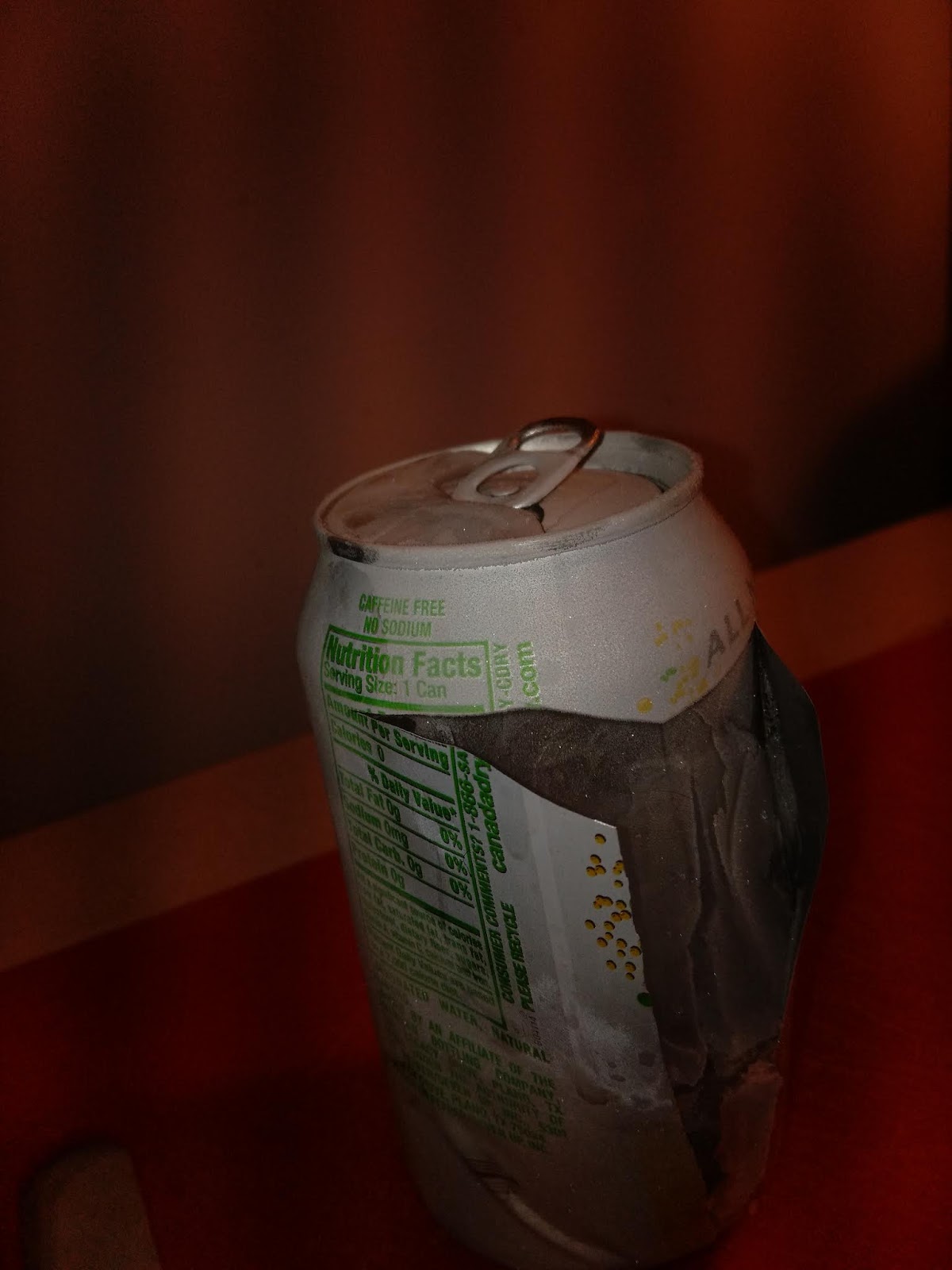
Our weather has been going from hot to cold and back. A couple of days ago, I wanted to do an experiment of leaving a soda can full of water outside overnight because it was going to get down to 24 degrees Fahrenheit (-4 C). Unfortunately, my mom didn't know what it was for, and used it to water her plants. And the next couple of nights, the low temperature was around 65F. So I had to try the experiment again in the freezer instead.
Ice can be very powerful. Glaciers. Frost heave. Burst pipes.
Even though the top of the can had an opening for water to escape, the ice blocked it. It split the can!

Monitor Stand Adapter

My computer has an ultrawide monitor. It's great, but it takes up a lot of desk space. I decided to replace the stand with an older one(I think it's from 2003) that has adjustable height and rotation. Then I can put my speakers underneath and use more of my desk space. I made an adapter plate to attach it by drilling extra holes in the VESA mount because the mounting holes are closer together than the ones on the stand. I tested it in "portrait mode" with Minecraft, and it looks crazy. It is not practical for gaming, but might be good for reading text. After that, I rotated it back to normal, but adjusted the height so it's about 6 inches off the desk. The stand that it came with only does tilt.


Here's an Amazon affiliate link for the monitor I have: https://amzn.to/2TpebmN

Sunday, March 3, 2019

Drill Bit Sharpener

I have wanted to try re-sharpening drill bits for a long time. I think it would be a good way to reuse something instead of throwing it away too soon. I had seen one called the Drill Doctor on Youtube that has its own motor, but it was too expensive. I found a drill bit sharpener at Harbor Freight that was a reasonable price and decide to try it out.

You can buy it online through Amazon, but it costs more. Here's my affiliate link: https://amzn.to/2ExXew8

The sharpener is a grindstone with a jig attached. It works on 2 mm to 12.5mm bits. To use this, you need a drill that spins between 2000 and 3500 RPM. There's a typo on one side of the package that says it could work at 35000 RPM, but I don't think that would be safe. I used my drill press at 2100 RPM and it worked on my first try. It got the bit sharper, but the point and edges aren't perfect. I think I could get better at using it with more practice.

I saw a video on Youtube about a giant automated drill bit sharpener. It was really cool, but it is meant for much larger drill bits in an industrial environment. Here's the link: https://www.youtube.com/watch?v=jx_9GK3sF6g&t=4s